Last modified: 2026-07-25 by martin karner
Keywords: qiryat shemona | kiryat shemona | iriyat qiryat shemona | text: hebrew (blue) | coat of arms: base (sunburst) |
Links: FOTW homepage |
search |
disclaimer and copyright |
write us |
mirrors
![[Qiryat Shemona banner]](../images/i/il-qirshm.jpg) image located by William Garrison, 29 March 2024
image located by William Garrison, 29 March 2024
Banner with the new logo of Qiryat Shemona, the northernmost city of Israel. The purple letters show
the city's name in Hebrew letters (The small lettering is not discernable). Also here we can assume that
the flag has the same design, and that the colour of the background may vary (See Dov Gutterman's comment).
The photo above was taken on 21 March 2024 at a ceremony to commemorate the battle of Tel Hai in 1920
(Source
with original photo) (Battle of Tel Hai: see Tel-Hai Trustees;
Flags on a Zionist Youth March (1937)).
Martin Karner, 29 March 2024
See also:
![[Municipality of Qiryat Shmona (Israel)]](../images/i/il-qismn.gif) image by Dov Gutterman | 2:3    Coat-of-arms adopted 1st July 1976 |
Qiryat Shmona (meaning Town of Eight, named after the
eight men who led by Yosef Trumpeldor were killed defending
nearby Tel-Hai in 1920; see also Betar (Youth organization);
Flags on a Zionist Youth March (1937)) is the
northernmost municipality (there
are Local Councils further north) in Israel, situated in the
Upper Galilee on Road 90. Founded in 1949, it has 21'500 inh.
During my visit I expected the multicolour flags which I
remembered from previous ocasions. However this time only one
background was to be seen, green with the emblem in blue, with an
inscription below. The municipal emblem was first published in
the official gazette (Rashumot, Yalkut ha-Pirsumim), YP
845, 18 May 1961 for the then Local Council; after it became a
municipality in 1974 the emblem was replaced, being published in
the official gazette in YP 2233, 1 July 1976 – thus the first
proclamation according to the current
Act.
Sources: author's own observation, 18 September 2001; this
webpage.
Dov Gutterman, 27 September 2001
Qiryat Shemona was established on 1949 on the lands of the
deserted Arab village Khalsa and was first named Qiryat
Yoseph. It became Local Council in 1953 and municipality in 1974,
a change that resulted a change in the emblem.
The Local Council emblem appears on a stamp
issued on 2 February 1966.
Sources: www.galil-net.org.il [retrieved],
www.k-8.co.il [retrieved].
Dov Gutterman, 5 May 2005
![[Municipality of Qiryat Shmona]](../images/i/il-qismn1.gif) image by Dov Gutterman
image by Dov Gutterman
Few days ago I saw a piece on TV about the local football team
(won 2nd league championship) and there was a flag, but black on
yellow.
Dov Gutterman, 19 June 2003
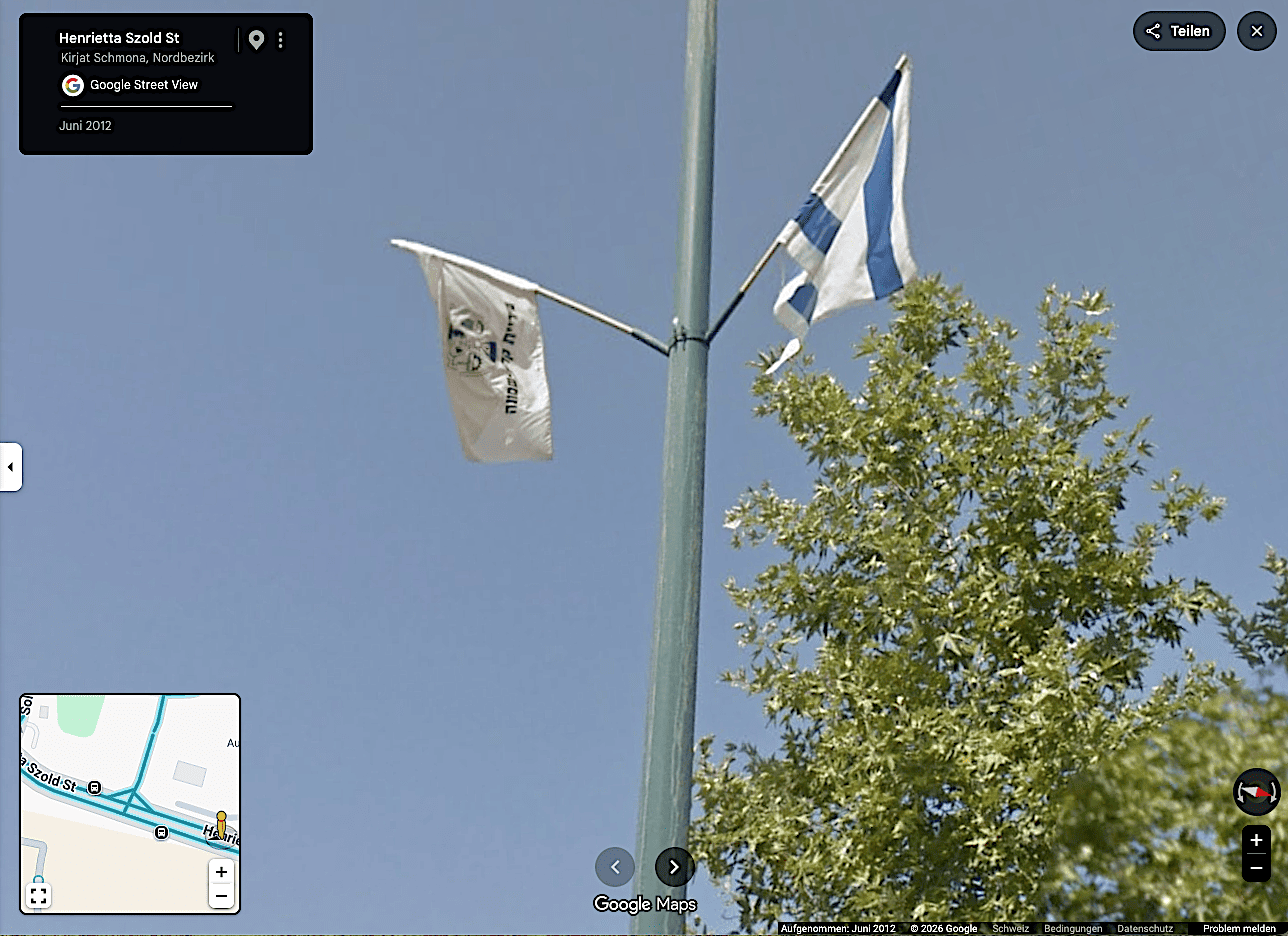
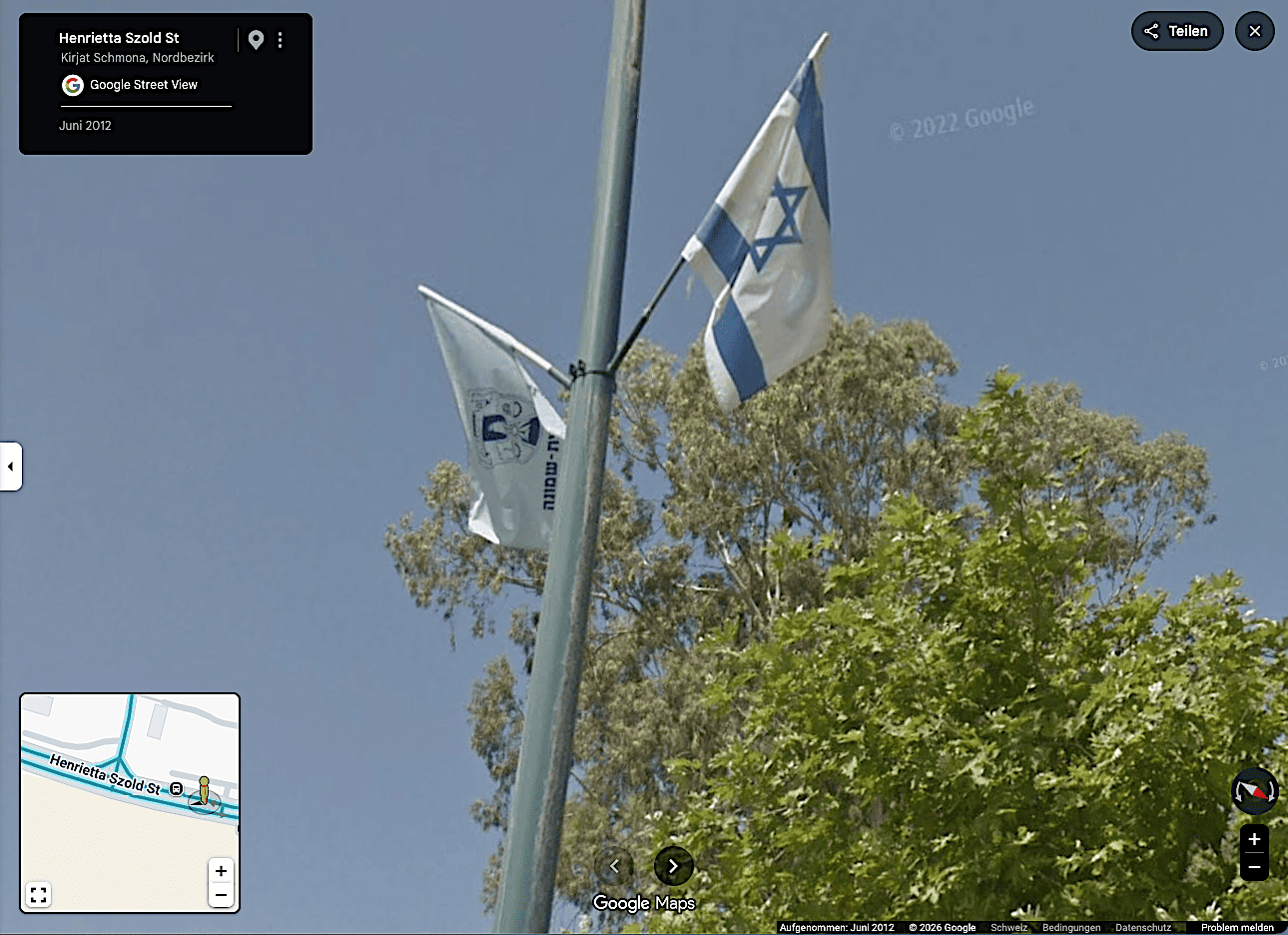
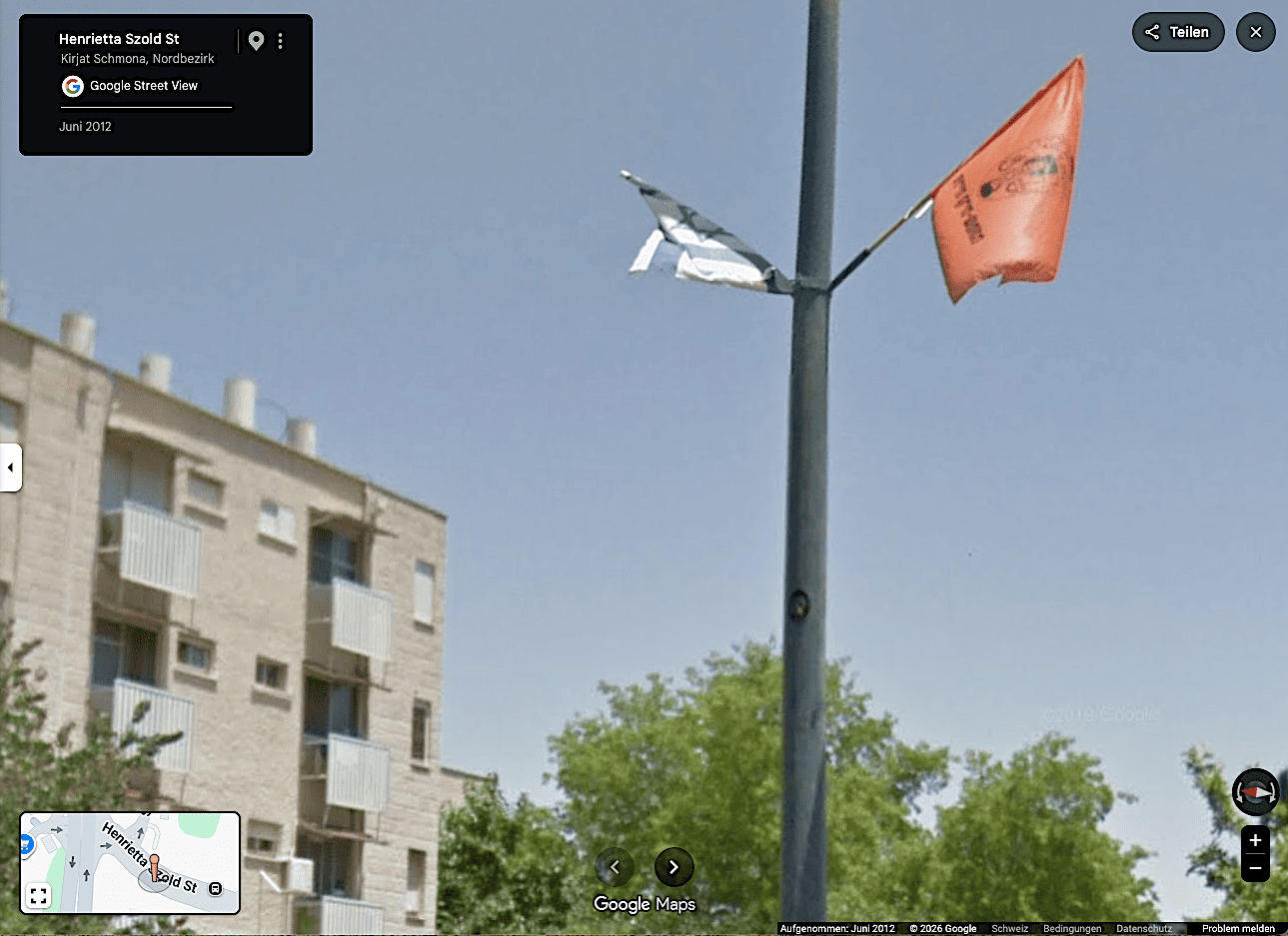
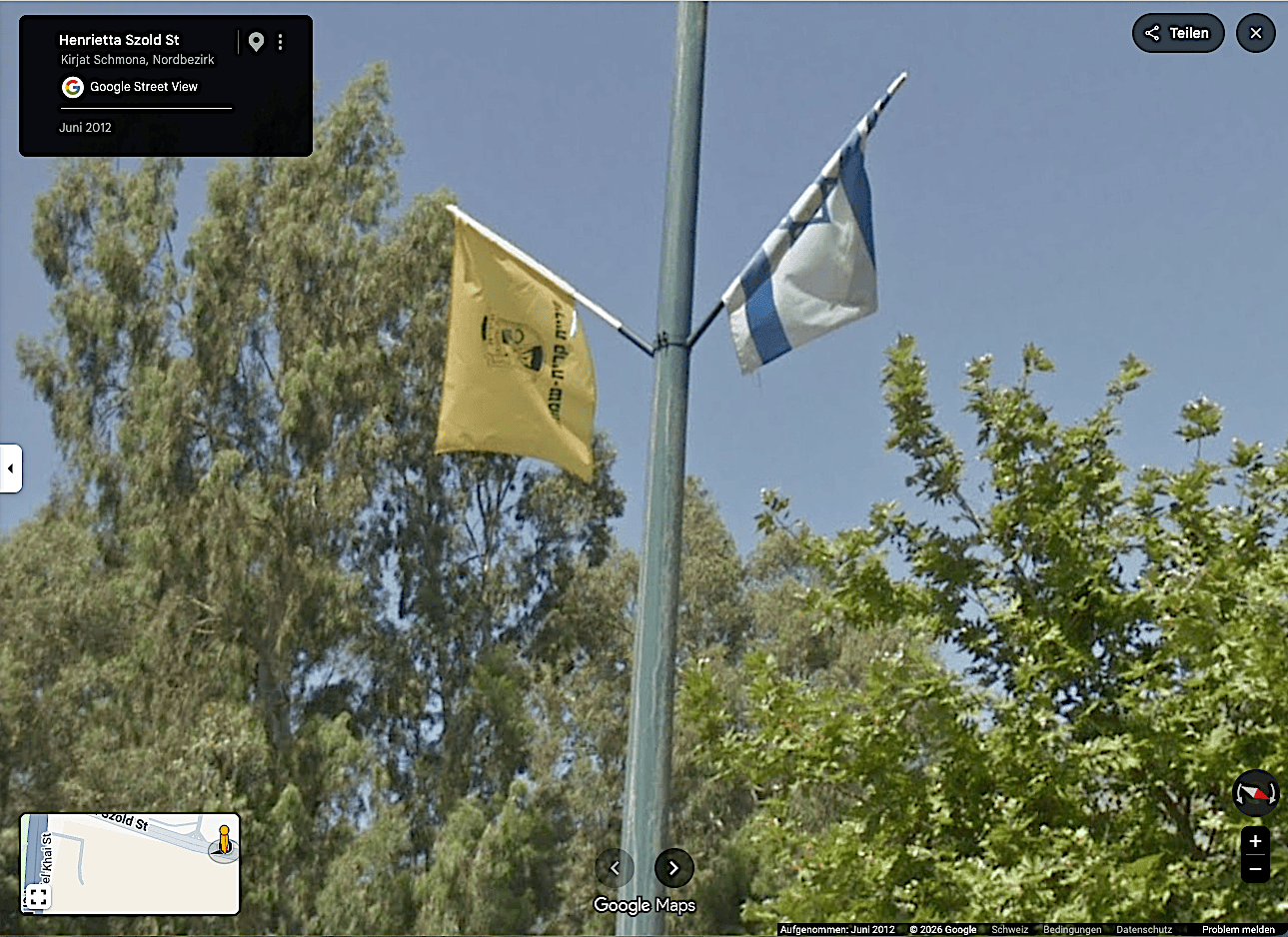
♦ photo (white-black)
♦ photo (white-blue)
♦ photo (orange)
♦ photo (yellow)
![[logo]](../images/i/il-qismn_log.jpg)
(source)
From Hebrew Wikipedia:
2017 the municipality underwent a rebranding process that led to the adoption of a new "logo" – the city's current coat of arms – along with a new slogan: "A Space of Opportunities".
The central motif of the emblem is the number 8, composed of circles and arcs in eight different colours, to the right of the city's name and motto. To the left of the inscription, the city's previous emblem – adopted in 1974 to symbolise the preservation of the values that have accompanied the city throughout its history – is retained in a smaller form. The coat of arms features eight colours, with each colour representing an area of "activity and development in the city":
Red – symbolises education and values. Purple – symbolises the city's community. Yellow – symbolises the city's young people. Orange – symbolises the city's infrastructure and growth. Green – symbolises the city's environment. Turquoise – symbolises the city's culture and arts. Pink – symbolises the city's economic development. Blue – symbolises sport and a healthy lifestyle.
The positioning of the coloured circles at the base of the number eight symbolises the city’s infrastructure and community.
(Translated with DeepL.com)
![[CoA]](../images/i/il-qismn).jpg)
(source)
![[CoA]](../images/i/iil-kirshm1953.png)
From Hebrew Wikipedia:
When Kiryat Shmona became a local council in 1954, its first coat of arms was adopted. It consisted of a
shield bearing a vertical bicolour stripe and two elements: a cotton flower and an industrial wheel,
symbolising the city's industries. At the top of the coat of arms was the council's name and a wreath.
This version was commemorated on an Israel Post stamp on 2 February 1966 [link above]. This coat of arms
remained in use until 1974, when the town was granted city status.
(Translated with DeepL.com)