
Last modified: 2026-09-26 by martin karner
Keywords: vexillological terms |
Links: FOTW homepage |
search |
disclaimer and copyright |
write us |
mirrors
On this page:

Flag of Válega, Portugal
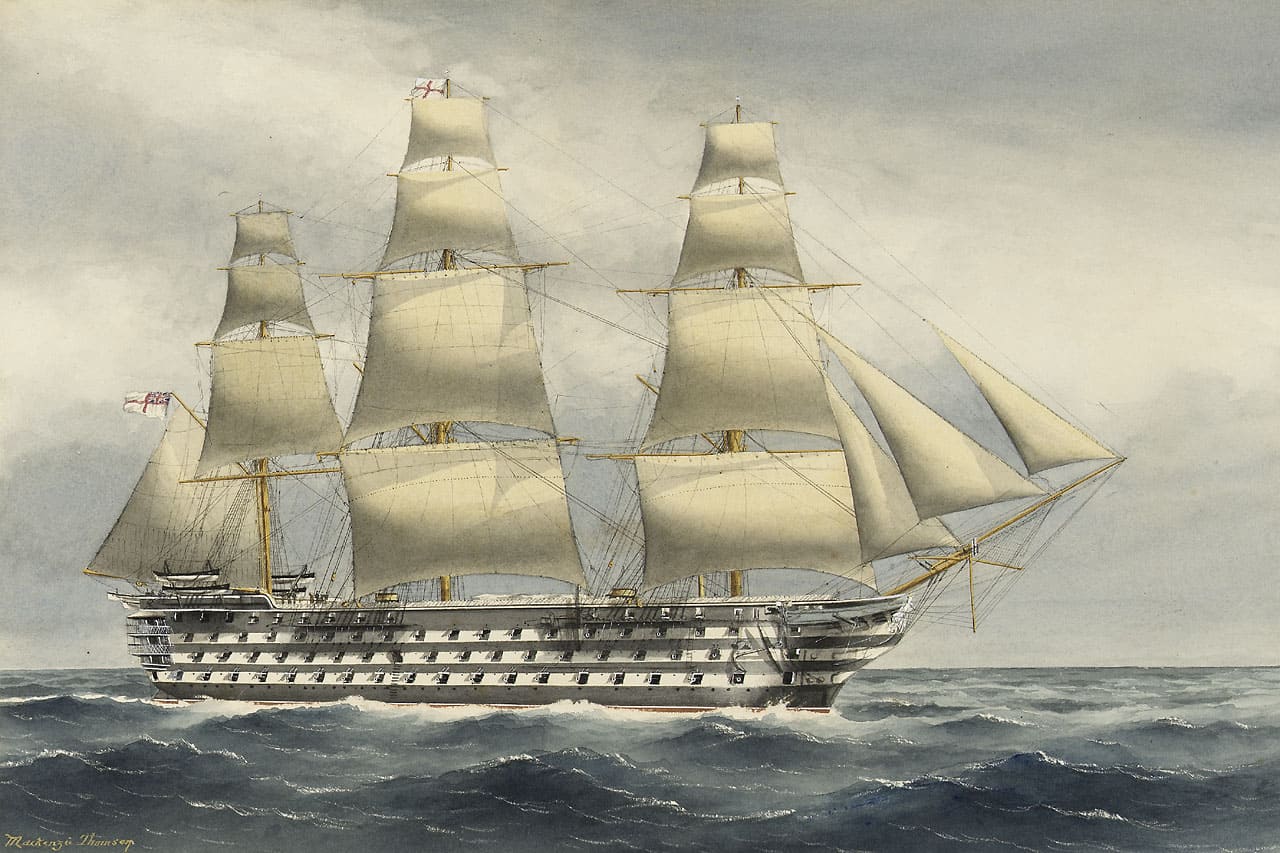
HMS Victoria of 121 guns 1858, UK (Wikipedia)
Please note that in English then British usage only vessels of the Royal Navy are permitted to wear a
pennant.
Red Commissioning Pendant, England then UK c1625–1864 (CS)
Notes
a) When used on the arms of a ruling
prince or sovereign a mantle becomes a pavilion.
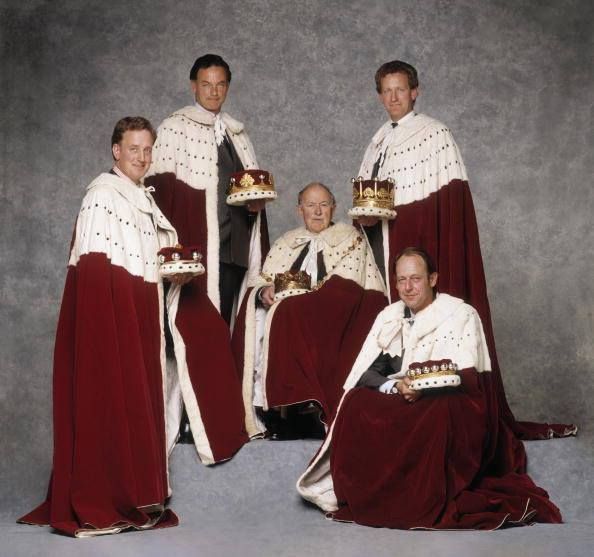
b) Mantles may still be seen in
the parliamentary and state robes worn by British peers (which are graded according
to rank) – see "mantled 2)" (below).
Please note that the word "mantle" has been used in medieval and renaissance times to
describe an outer garment – see note b) at "mantle" (above) – however, its use in
English heraldry is much more restricted as may be seen from the entries for "mantle 1)" (above)
and "mantling" (below).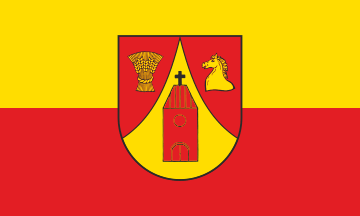
.gif)

Flag of Körchow, Germany;
Arms of São Vicente, Portugal;
Flag of Altenkirchen County, Germany
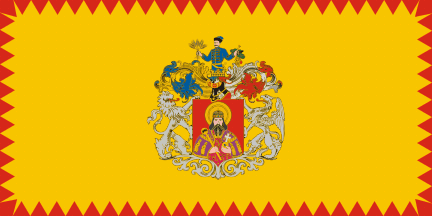
Flag of Miskolc, Hungary
Please note with regard to 1), that mantling (at least in this context) originated as a protective covering for the helmet.
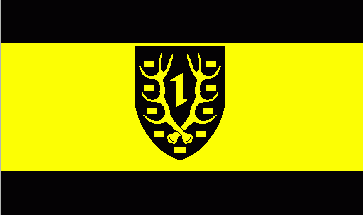
Flag of Kirchhundem, Germany
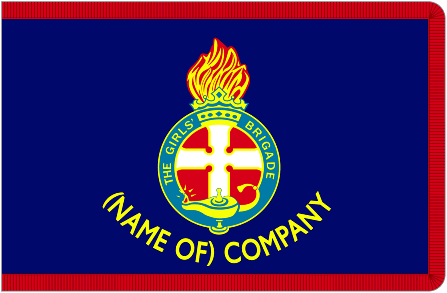
Girl’s Brigade Company Marching/Parade Flag, UK (Graham Bartram)
Please note that a Crown of the Holy Spirit (illustrated below) is often (sometimes officially)
misidentified as a Marian Crown.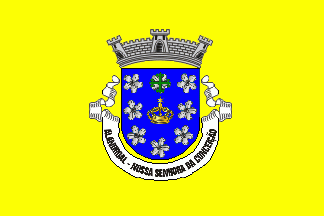
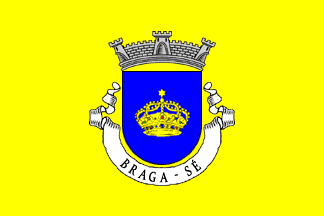
Flag of Alandroal (Nossa Senhora da Conceiço), Portugal;
Flag of Sé, Portugal;
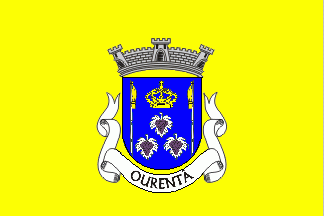
Flag of Ourentã, Portugal
.gif)
Arms of Manigoto, Portugal



Catholic Marian Flag (CS); Flag of the Catholic Church in Poland;
Flag of the Catholic Church in Malta

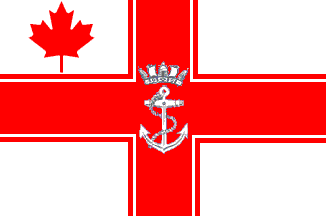
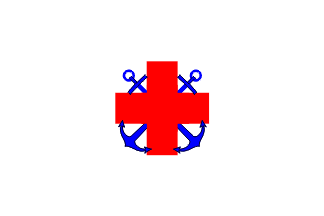
Lifeboat Society, Belgium (Željko Heimer);
Lifeboat Institution, Canada;
Water Rescue Society, Finland
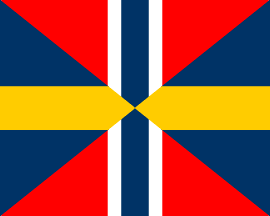


Norway-Sweden Union Mark and Naval Jack 1844–1905;
Arms of Bobenheim am Berg Germany (Wikimedia);
Presidential Flag of Bangladesh
![[cadency marks]](../images/v/vx-d062.gif)
The cadency marks of the 1st to the 6th son in English heraldry (Parker)
![[marks of difference]](../images/v/vx-pl-admir.gif)
![[marks of difference]](../images/v/vx-pl~vadm.gif)
![[marks of difference]](../images/v/vx-pl~radm.gif)
Flags of an Admiral, Vice-Admiral and Rear Admiral, Poland
Please note that this code first was appeared in 1817 and went through several changes before being
supplanted by the Commercial Code of Signals (later the International Code of Signals) in 1857. ![[Marryat example]](../images/v/vx-myt~7.gif)
![[Marryat example]](../images/v/vx-myt~3.gif)
![[Marryat example]](../images/v/vx-myt~5.gif)
Flags 7, 3 and 5 in Marryat’s Code of
Signals for the Merchant Service
ka.gif)
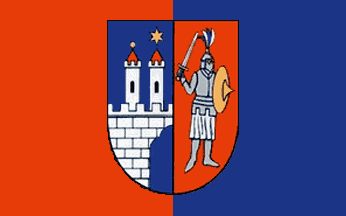
Flag and Arms of Kamienna Góra, Poland;
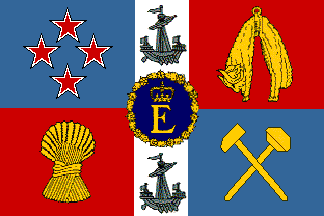
Royal Standard of New Zealand
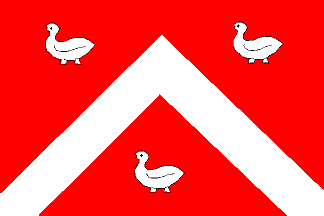
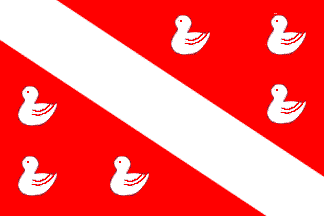
Flag of Ens, The Netherlands;
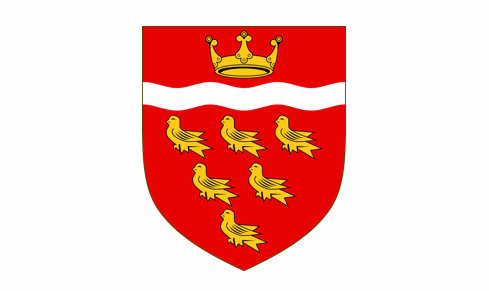
Flag of East Sussex, UK;
A Flag of Bergen, The Netherlands
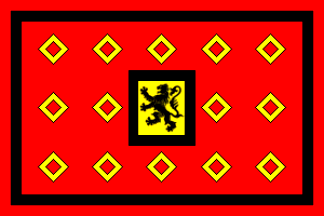
Flag of Landivisiau, France
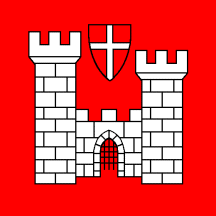
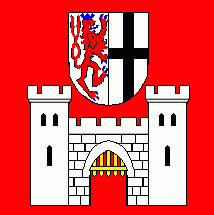
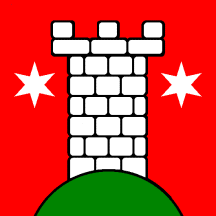
Flag of Romont, Switzerland;
Square Flag of Königswinter, Germany;
Flag of Aristau, Switzerland
![[Masthead Pennant - Spain]](../images/v/vx-d207.gif)
Masthead Pennant of Spain
![[Masthead Pennant - Belgium]](../images/v/vx-d209.gif)
Masthead Pennant of Belgium
![[Masthead Pennant - Taiwan]](../images/v/vx-d5402.gif)
Masthead Pennant of Taiwan
Notes
a) A distinction has been drawn between
the standard masthead pennant flown by commissioned warships as defined in 1) above, and the various
command pennants that are flown in addition and subordinate
to it.
b) There are three exceptions to this – the broad command pennant,
broad pennant
and the burgee command pennant
– all of which replace the masthead pennant when flown.
![[Masthead streamer]](../images/v/vx-henrigrace.jpg)
The "Henri Grace à Dieu", English Royal Navy c1525
(Wikipedia)
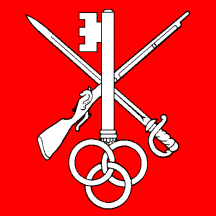
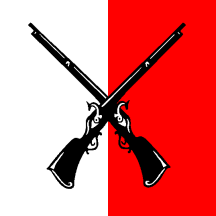
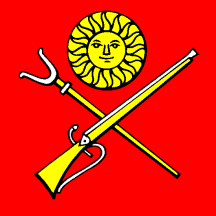
Flag of Le Chenit, Switzerland;
Flag of Crissier, Switzerland;
Flag of Wohlenschwil, Switzerland
When I was much fitter I used to shoot (but only at paper targets, because I don't believe in
bloodsports), and I once loaded and fired a borrowed matchlock (twice). What a performance:
The first thing to do is remove the burning match from its holder and put it safely out of the way, then
you open the pan-cover, prime it (pour a little powder into the open receptacle on the lock-plate), then
close the pan-cover and
(placing the gun's butt on the ground) pour a further (much larger) measure of
gunpowder down the barrel. You then follow it with a cloth or paper wad and withdrawing the ramrod from
beneath that barrel, ram it down and proceed
to drop in a lead ball, following it with another wad (also
rammed down). You then return the ramrod to its place, re-insert the burning match into the holder, open
the pan cover, place the barrel onto its rest, aim the piece (whilst
hoping for the best) and squeeze the
firing lever which lowers the burning match into the priming powder, with the resulting fire travelling
down a channel and igniting the main charge thus firing the piece – in other words:
"poof"
– "bang", with a resulting (and very satisfying) cloud of smoke totally obscuring any target.
The whole process took me well over a minute, although with practice (so I am told) one shot a minute is
easily possible.
– Christopher Southworth
![[matricular flag - Spain]](../images/v/vx-es~gc.gif)
![[matricular flag - Spain]](../images/v/vx-cu_remed.gif)
Matricular Ensign/Registration Flag of La Palmas de Gran Canaria, Spain c1870;
Matricular Ensign/Registration Flag of San Juan de los Remedios de Cuba, Spain c1850
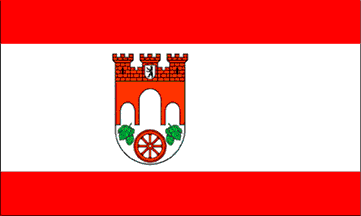
cv.gif)
Flag of Pankow District 1992–2000, Germany;
Arms of Chernivtsi City, Ukraine
Introduction | Table of Contents | Index of Terms | Previous Page | Next Page
