
Last modified: 2026-10-10 by rob raeside
Keywords: liberia |
Links: FOTW homepage |
search |
disclaimer and copyright |
write us |
mirrors
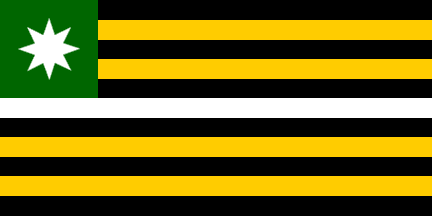 image by António Martins-Tuválkin, 29
September 2026
image by António Martins-Tuválkin, 29
September 2026On page 12 of the proceedings of the 27th I.C.V., ed. by Ian Sumner and Margaret Sumner and published in 2022 [icv17], a Liberian national flag proposal is shown, as part of "Flags and the anniversaries of 2017: myths, mistakes, misconceptions", by Kevin Harrington [hrg22]. The photo shows an actual flag, laid flat, and the text about it reads, in full:
Liberia's flag turned 170 on 26 July 2017. Its red, white and blue colours, patterned after those of the USA, were assailed by Sir Harry Johnston as un-African. He offered a flag of green, black, gold and white—an unusual and unsuccessful move then, not at all like today’s internet where proposals for changing national flag colours and designs appear daily.This excellent proposal for a flag was sadly overlooked in the short account about it in [hrg22]. There is no description of this flag other than its colors, as quoted above.
António Martins-Tuválkin, 29 September 2026