
Last modified: 2026-08-21 by martin karner
Keywords: baden | baden bei wien | bicolour: red-white |
Links: FOTW homepage |
search |
disclaimer and copyright |
write us |
mirrors
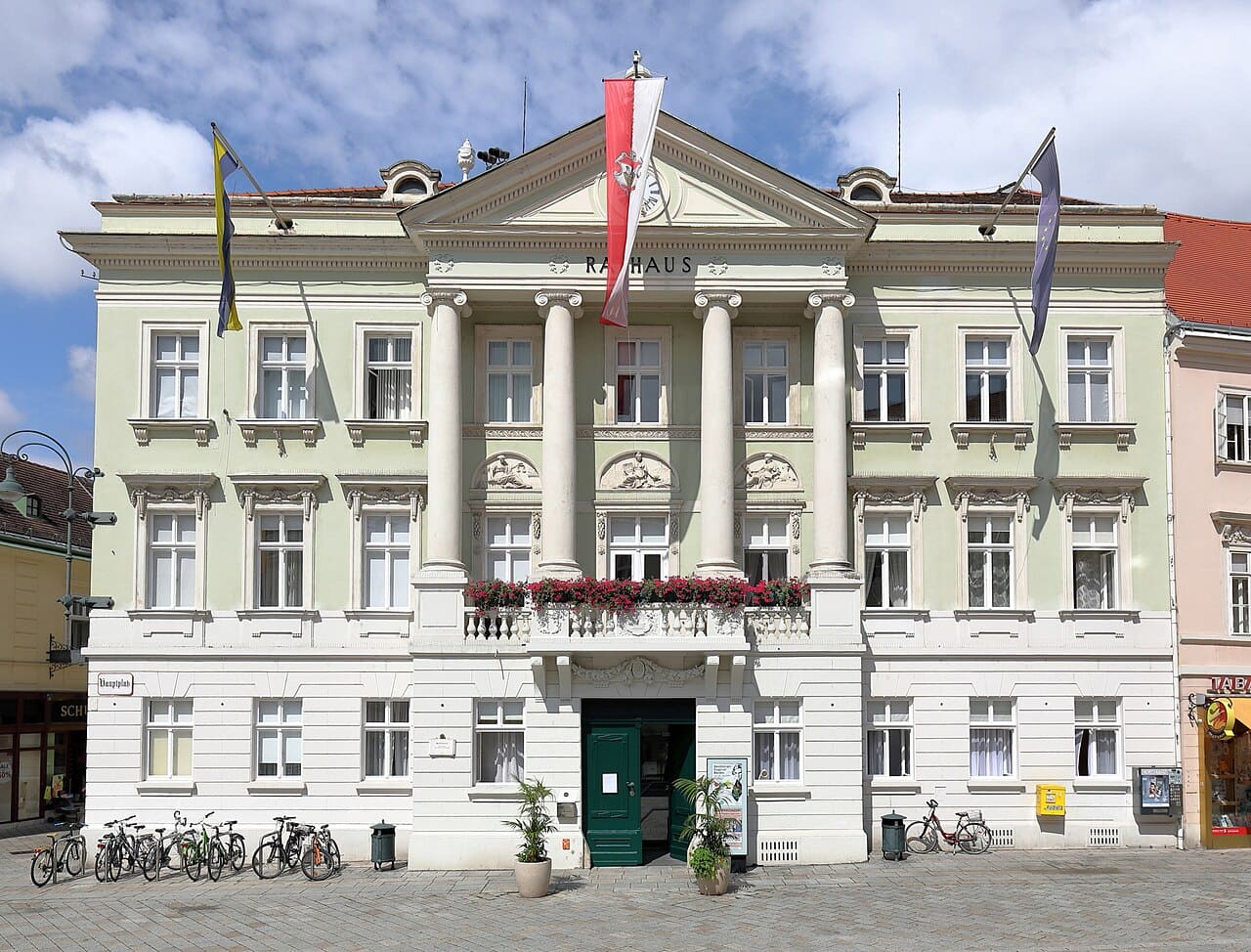
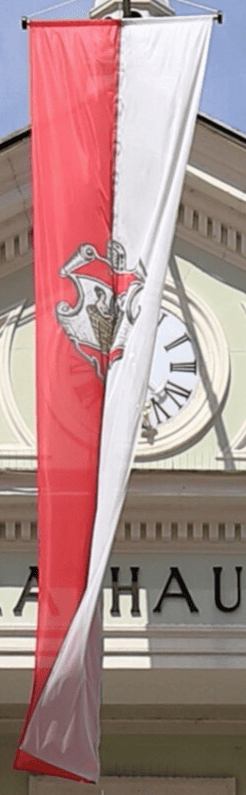
 image by Martin Karner
.jpg)
(source)
A Renaissance (or Baroque) shield having an elaborate Silver surround ensigned
by a symbol of the Same then Gules a fess Argent bordered of the First with water pouring Azure and Or
touching the chief surmounted by two nude people Proper bathing in a tub
Or detailed Sable.
Christopher Southworth, 29 July 2026
The arms are canting with the bathing people (baden = to bathe).
The spa and bathing tradition of Baden near Vienna dates back to Roman times. The Romans already made use
of the sulfur-rich thermal springs for their soothing and therapeutic properties. Over the centuries,
Baden developed into one of Central Europe's most important spa towns and remains renowned for its thermal
baths to this day.
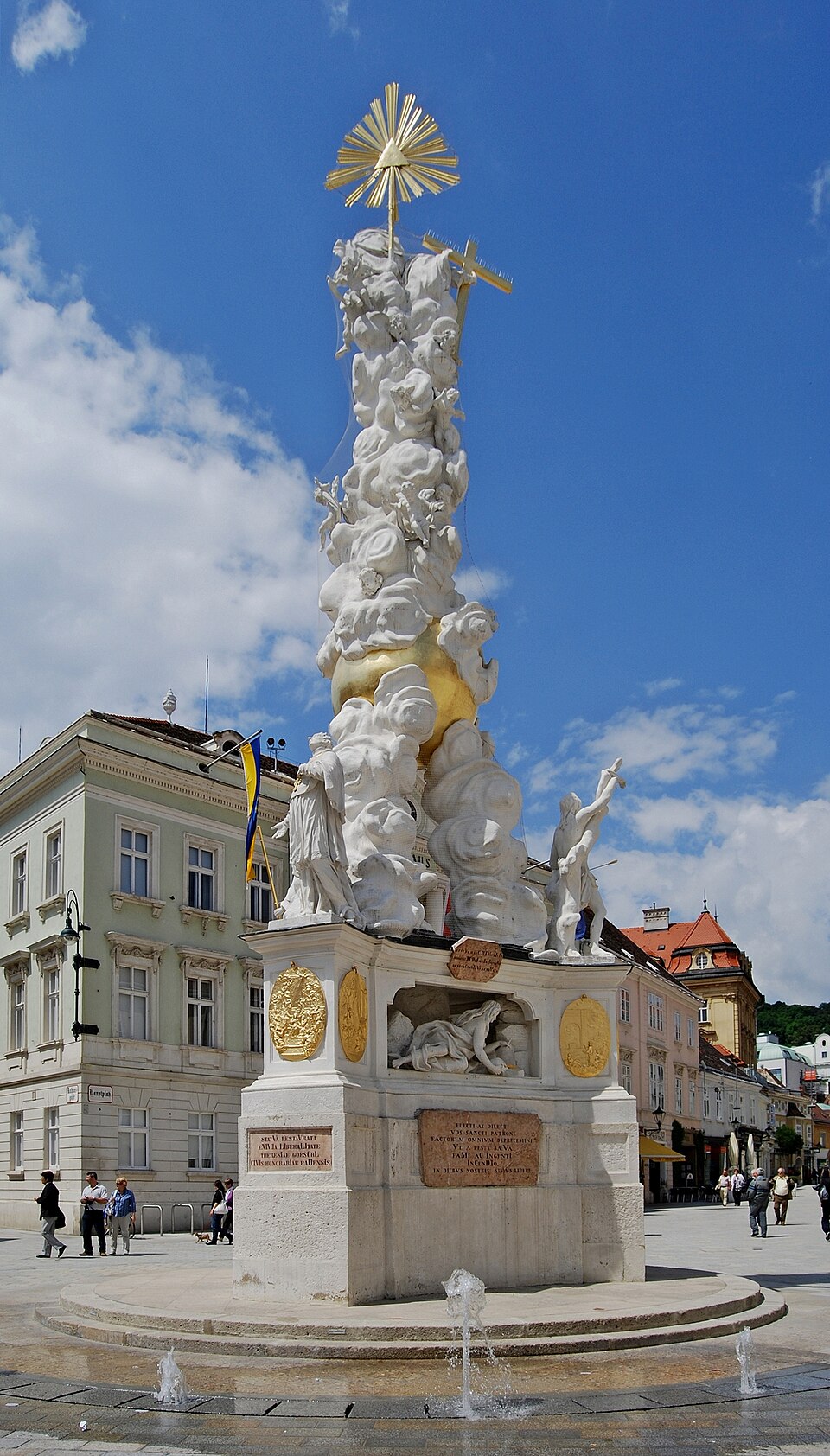
The fountain behind the bath tub was probably drawn based on the so-called Plague, or Holy Trinity Column
(Pestsäule/Dreifaltigkeitssäule). Dedicated to the Holy Trinity, it's one of the city's
most important monuments. It was erected on the main square by the citizens as a token of gratitude after
the plague epidemic of 1713 claimed comparatively few lives
(photo source).
Communal website: https://www.baden.at
Martin Karner, 29 July 2026
1529.jpg)
(source)
Oldest known city seal from 1529. The seal commemorates the beginning of the Turkish Siege of Vienna
with the inscription "AM+23+TAG+SEPTEM+1529+TURCK+BELEGERT+WIENN". 23 September was the day the
Turkish troops reached the town of Baden. The beginning of the siege of Vienna was on 27 September.
The inscription "1488" is wrong, the correct year is 1480, when the city received its legal
privileges from emperor Friedrich III.
Martin Karner

(source)
Seal Stamp (Siegelmarke), in use 1850–1923.
.JPG)
.png)

_p190_Stadtsiegel_mit_Umschrift_zum_Einfall_der_T%C3%BCrken_am_23._September_1529.jpg)
