Last modified: 2026-07-18 by martin karner
Keywords: rosh pinna | mo'atza mekomit rosh pinna | coat of arms (landscape: proper) |
Links: FOTW homepage |
search |
disclaimer and copyright |
write us |
mirrors
![[Local Council of Rosh Pina, light blue field (Israel)]](../images/i/il-lcrsp.gif) both images by Dov Gutterman | 2:3     Coat-of-arms adopted 30th October 1958 |
![[Local Council of Rosh Pina, white field (Israel)]](../images/i/il-lcrp1.gif) by Dov Gutterman | 2:3 |
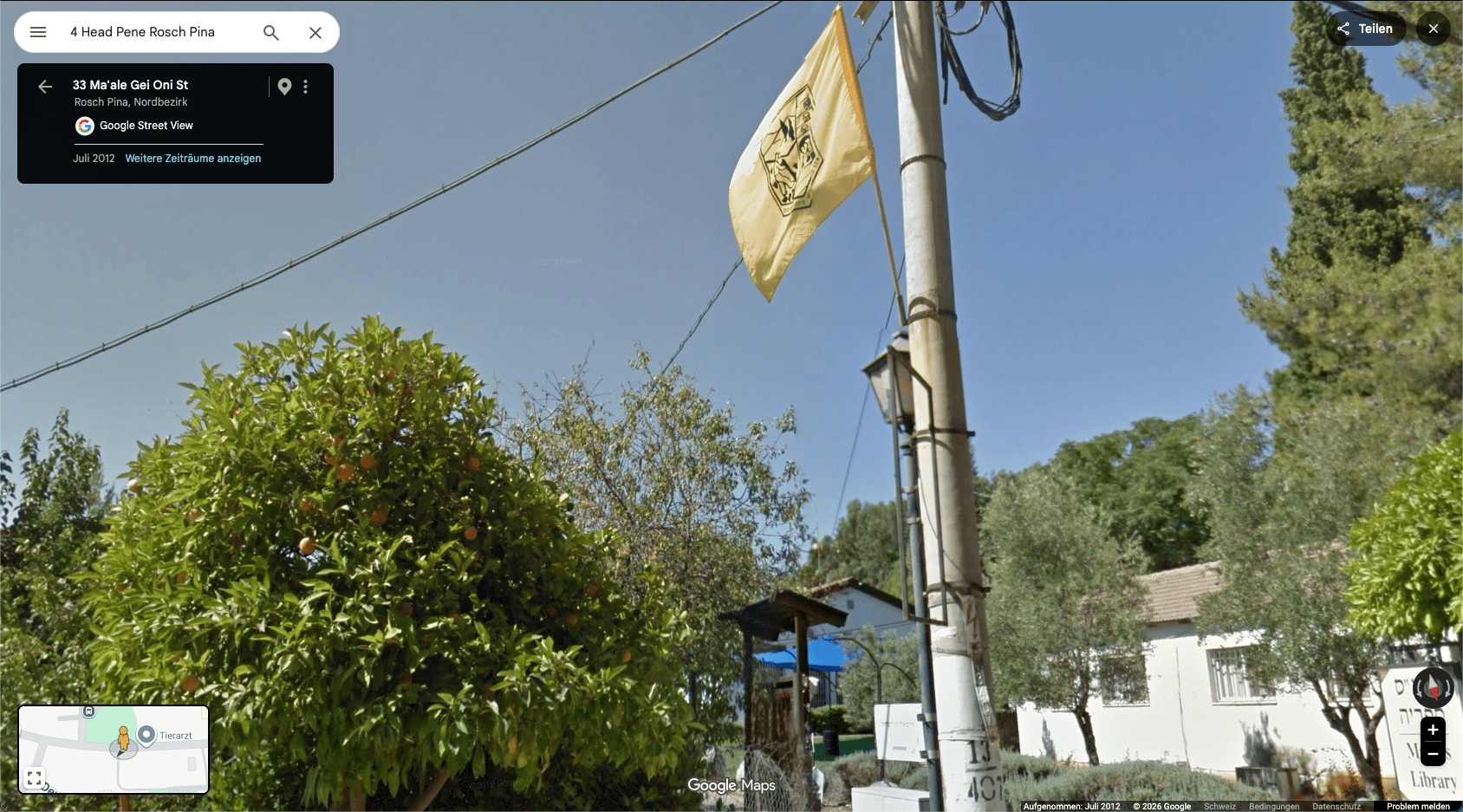
♦ photo (yellow)
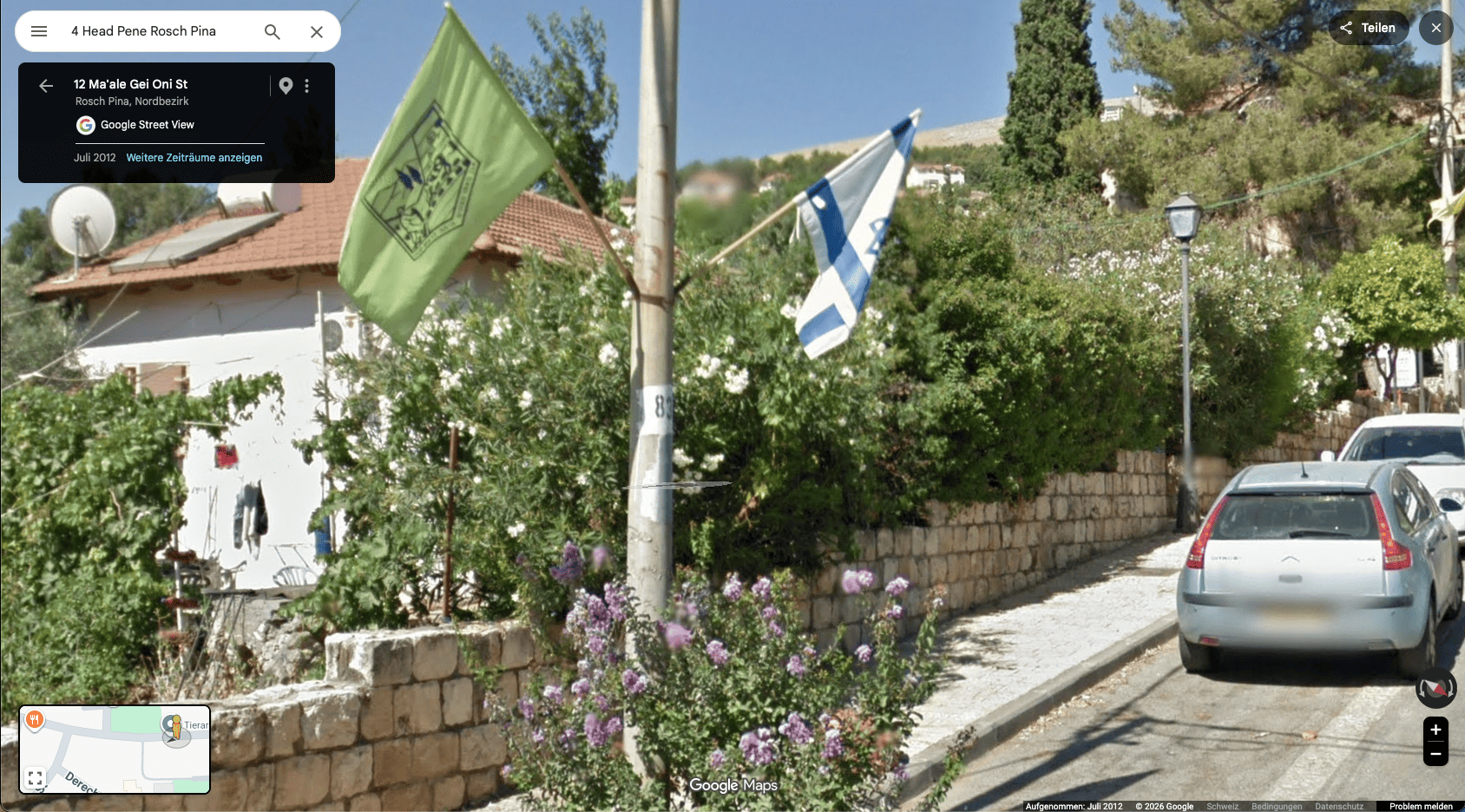
♦ photo (green)
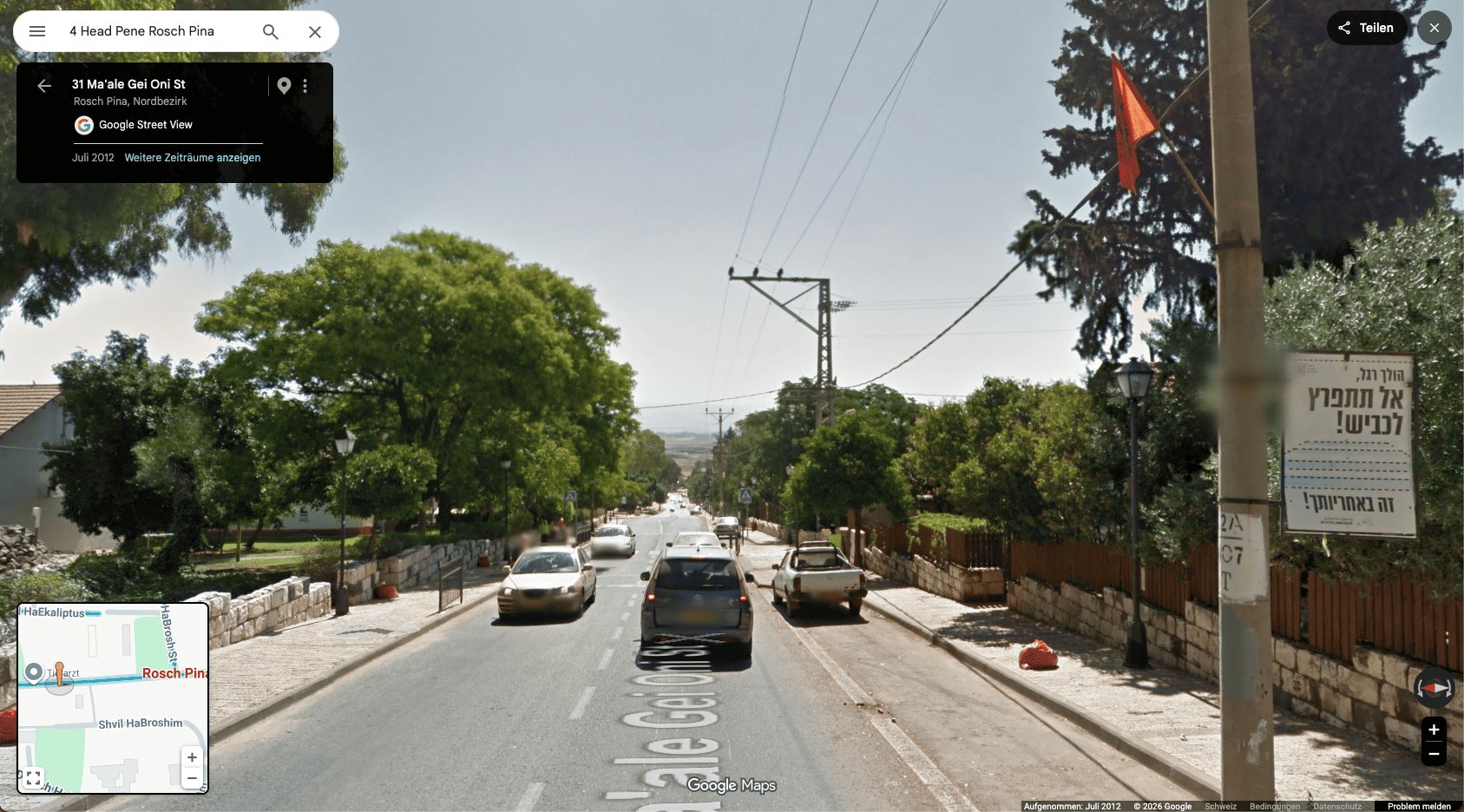
♦ photo (orange)
See also:
Local Council of Rosh Pinna (from Psalms 118:22)
is situated in the Upper Galilee on the eastern slopes of Mount Kna'an.
Founded 1882 and has 2100 inh.
During my visit there were no flags to be seen anywhere. The
information I had Prior to my visit I had received a report of a
white flag with emblem on white, but the source was the same that
reported a wrong flag for Mevo'ot
HaHermon. Moreover at this
website [retrieved] you can see the mayor with a light blue flag behind
him. Therefore both the light blue and white are possible, and
both only probable.
The municipal emblem was published in the official gazette (Rashumot,
Yalkut ha-Pirsumim), YP 631, 30 October 1958.
Source: author's own observation, 18 September 2001; this website [retrieved].
Dov Gutterman, 30 September 2001
In my visit of yesterday there were two variants: Green
outlined emblem on yellow and white outlined emblem on green. I
suspect that there is no fixed color that is used and other
variants also may exist.
Dov Gutterman, 23 March 2005
Rosh Pinna claim the seniority as the first colony that was
established (being first established in 1878, three weeks before Petah Tikva). However this was at the
same place but under different name (Gai Oni), and almost all
founders abandoned it in 1880.
Therefore the "official" establishment date was set to
1 December 1882, the day of the first plow of its land by the new
settlers with a new name. Nevertheless, Rosh Pinna had the first
Hebrew School in 1899.
In the early days, Rosh Pinna, under Baron Rotschild patronage,
was concentrated in production of wine and silk. Both branches
were abandoned in 1905 and it moved to regular agriculture.
Only in the last decades there was some development in the colony
and now this picturesque small colony also based on tourism.
Local Council since 1949.
Source: lib.cet.ac.il [retrieved]
The emblem appeared on a supplement of a stamp
issued on 30 April 1962 (80th anniversary) and on a stamp
issued on 8 February 1967.
Dov Gutterman, 5 May 2005
![[CoA]](../images/i/il)lcrsp.jpg) image located by Martin Karner
image located by Martin Karner
(source)
Inscription: "The stone [which] the builders refused is become the head [stone] of the corner." (Psalms 118:22)
From the Council's website (Hebrew):
The council's coat of arms depicts the historical roots of the settlement's founding; the settlement is
also known as "the mother of the Galilee settlements".
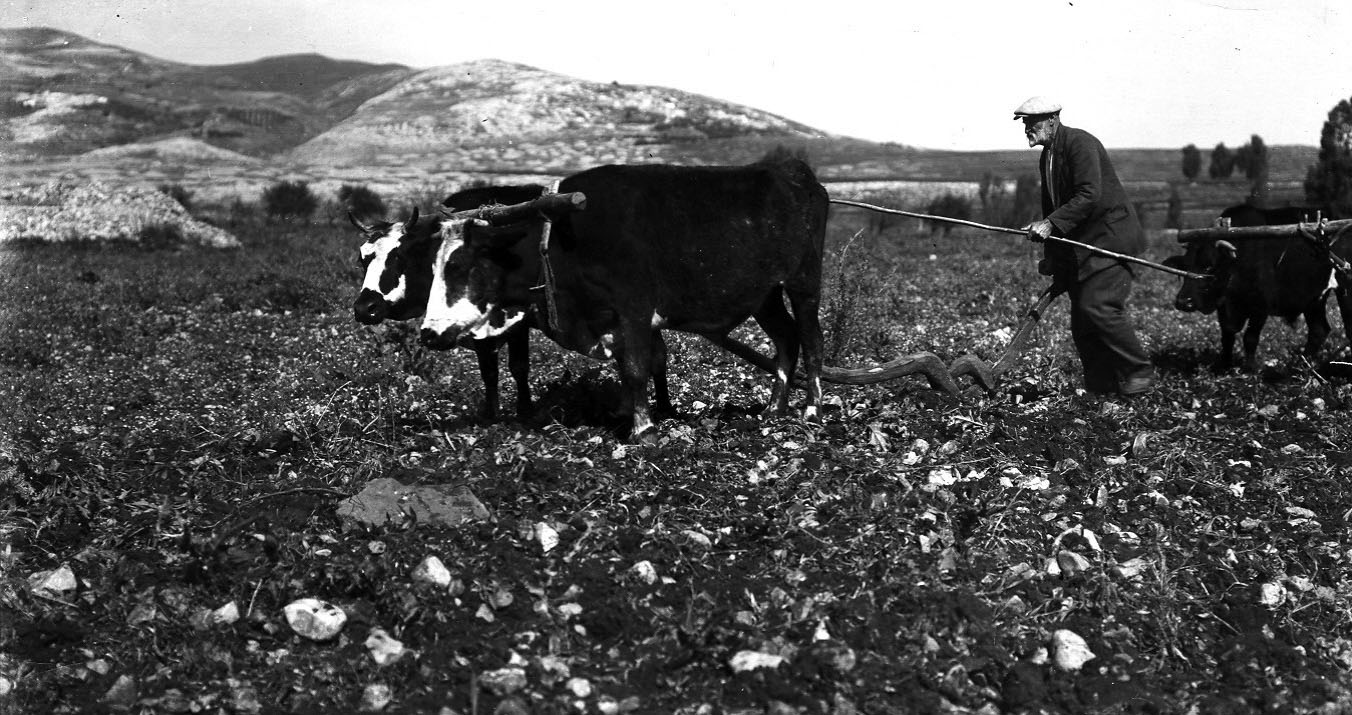
The coat of arms is designed in the shape of a shield and features an artistic rendering of the first
ploughing, depicting Shmil Katz ploughing with a yoke of oxen [photo].
At the bottom of the shield is a quotation from Psalm 118:22: "The stone which the builders rejected
has become the chief cornerstone", from which the settlement took its name, as proposed by its
founder, David Shuv. This verse refers to the settlement of Gei Oni, which preceded the immigration of
Romanian Jews by four years and was partially abandoned due to the harsh conditions.
(Translated with DeepL.com)