Last modified: 2026-08-01 by martin karner
Keywords: hornstein |
Links: FOTW homepage |
search |
disclaimer and copyright |
write us |
mirrors
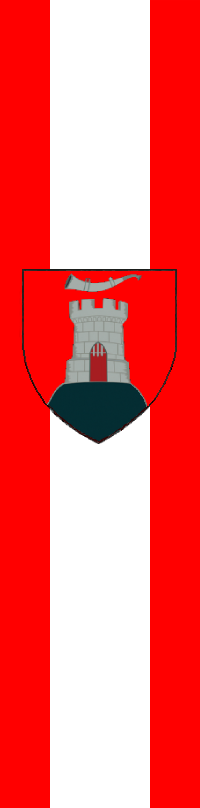 image by Martin Karner, 10 July 2026
Croatian: Vorištan; Hungarian: Szarvkő
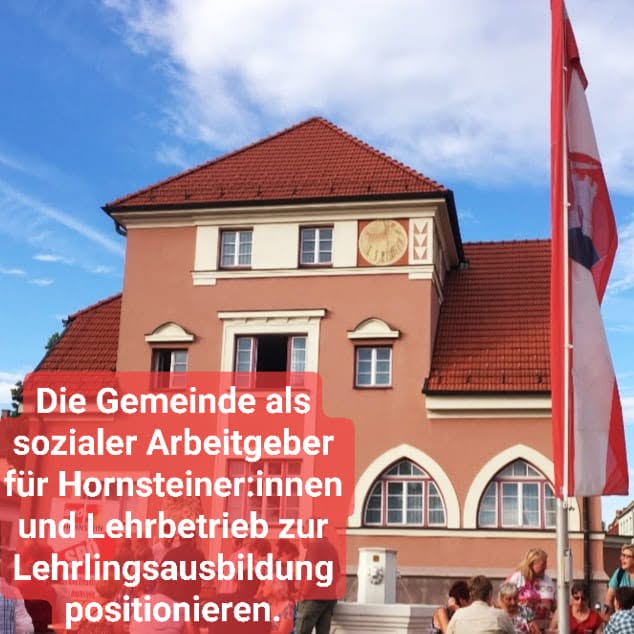
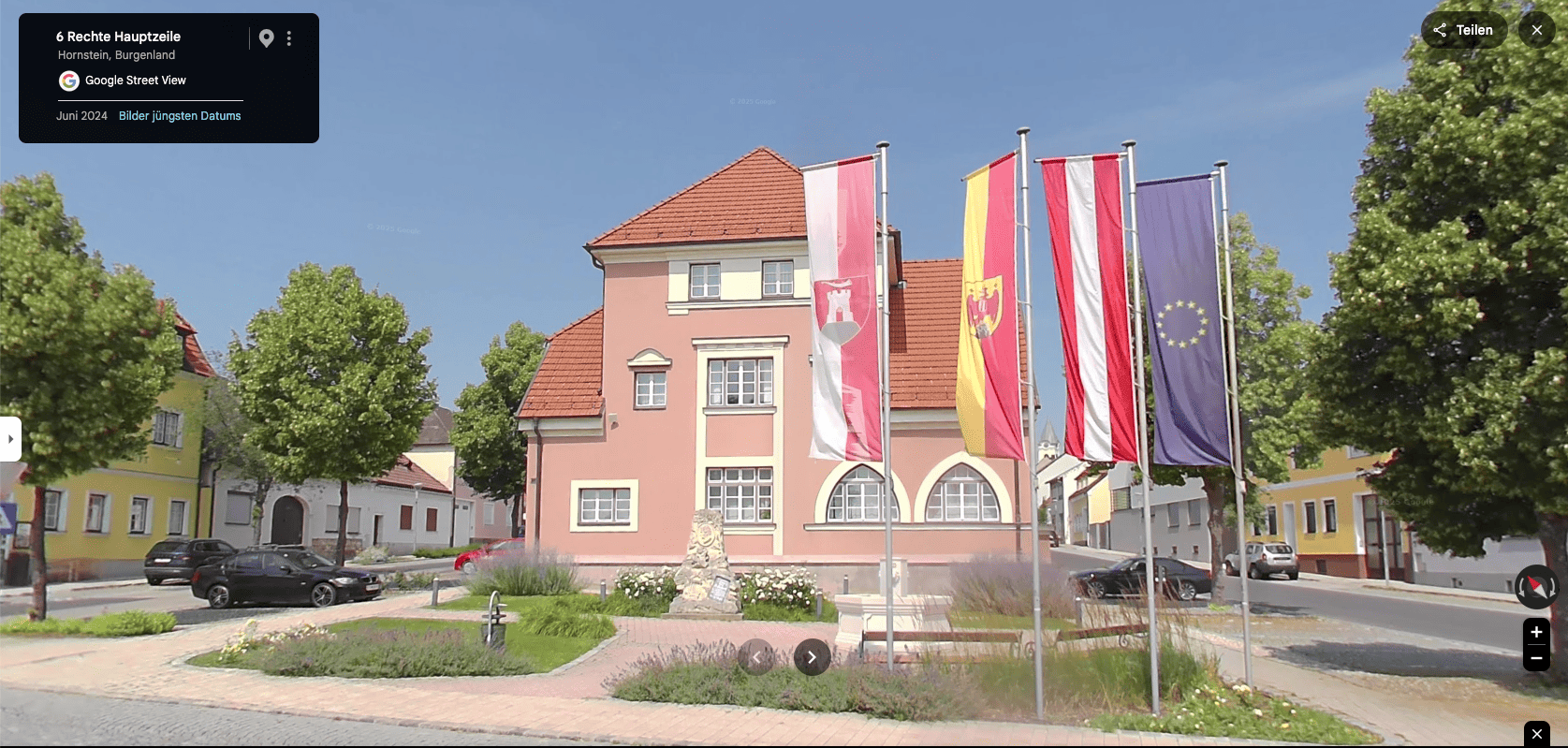
The official colours are red-white-red. While the white stripe covers 50 percent of the flag width, the
two red stripes cover each 25 percent. The municipal council officially established these colours on 31
January 1990 (information from the municipal administration; see also model flag,
provided by the municipal administration).
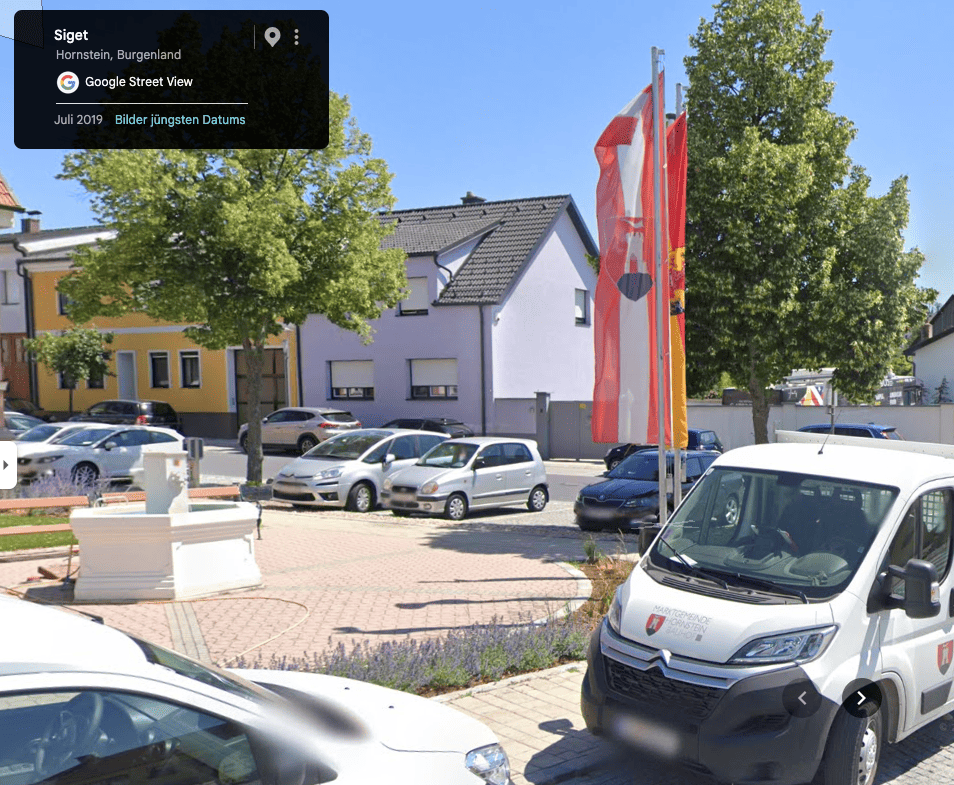
Beside these official flags there are also used incorrect versions with red-white (photo)
and three equal red-white-red stripes (photo |
presumption: they were ordered erroneously and are being used anyway for reasons of economy).
Martin Karner, 10 July 2026
See also:
.png)
(source)
Gules issuant from a mount Sable a tower embattled ajouré with (raised) portcullis Argent masoned
of the Second and in chief a bugle horn of the Third.
Christopher Southworth, 10 July 2026
The arms are canting with the bugle horn.
The tower on the coat of arms stands for the Hornstein castle from the 14th century, of which only ruins
remain today (photo source).
Due to its exceptionally strategic location at the western end of the Leitha Mountains, where the important
Vienna–Ödenburg (Sopron) road ran, Hornstein soon became a crucial pillar of Hungarian border
defense. The road via Hornstein was significant because, in the Middle Ages, the route of substantial
Levantine trade from Venice to Vienna, due to the difficult terrain, did not go over the Semmering Pass,
but instead followed the old Roman road via Steinamanger (Szombathely) and Güns to Ödenburg.
From there, a branch road led via Hornstein and Wimpassing to Vienna.
(Hornstein castle: then
and now, German)
Martin Karner, 10 July 2026
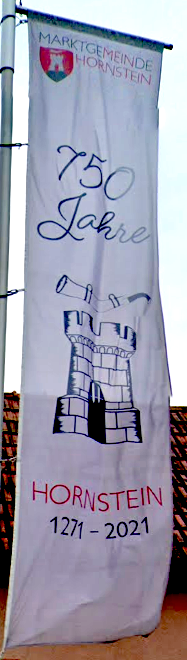
(picture)